
What role does technology play in assisted living?
Technology in assisted living is mainly used to support safety, communication, medication management, health monitoring, and everyday independence. It does not replace caregivers or personal relationships. Instead, it can help staff notice changes sooner, organize information, and give residents more control over daily routines.
For residents and families in Harrisburg, technology may be especially useful during winter weather, power interruptions, transportation challenges, or periods when family members cannot visit in person. The most helpful systems are those that fit naturally into care rather than making daily life feel overly monitored.
How can technology improve resident safety?
Safety technology can help staff respond to problems more quickly, but it should be designed around the resident’s needs and preferences.
Common examples include:
- Emergency call buttons worn as pendants or placed near the bed
- Bathroom and hallway call systems
- Motion sensors that identify unusual nighttime activity
- Door alerts for residents at risk of wandering
- Fall-detection devices
- Bed and chair sensors that notify staff when assistance may be needed
- Smoke, carbon monoxide, water-leak, and temperature alerts
These tools are not perfect. A sensor may produce a false alarm, fail to detect a slow slide, or miss a medical emergency that does not involve movement. A resident who presses a call button still needs a timely response from trained staff.
Families should ask whether alerts are monitored continuously, who receives them, what happens when an alarm is triggered, and whether residents can turn off or adjust devices in their rooms.
Can technology help prevent falls?
Technology can support fall prevention by identifying patterns such as repeated nighttime bathroom trips, changes in walking speed, or increased difficulty getting out of a chair. Staff may then review whether a resident needs a medication review, mobility assessment, better lighting, different footwear, or assistance with transfers.
Technology should not be treated as a substitute for a complete fall-prevention plan. Good lighting, uncluttered walking paths, properly fitted mobility equipment, strength and balance activities, and staff observation remain important.
Seasonal conditions also matter. In the Harrisburg area, snow, ice, wet entryways, and darker winter afternoons can increase the need for careful footwear, clear pathways, and reliable communication about outdoor conditions. Sensors can alert staff to movement, but they cannot remove ice from a walkway or replace judgment about whether an outdoor trip is safe.
How are electronic medication records used?
Electronic medication records help staff document which medications were given, when they were administered, and whether a resident refused or missed a dose. Some systems can flag a late administration, a possible duplicate entry, or a change in the prescribed schedule.
In Pennsylvania assisted living residences, medication administration remains governed by state requirements. Electronic documentation does not change who is permitted to administer medication or eliminate the need for current prescriber instructions. The system is a recordkeeping and safety tool, not an independent decision-maker.
Residents and families may reasonably ask:
- How are medication changes entered and verified?
- What happens if the electronic system is unavailable?
- Are refusals, missed doses, and medication errors documented?
- Who reviews alerts?
- How is information protected from unauthorized access?
A digital record is only useful when staff enter accurate information at the correct time and follow up on warnings rather than simply clearing them.
Does technology make it easier to communicate with families?
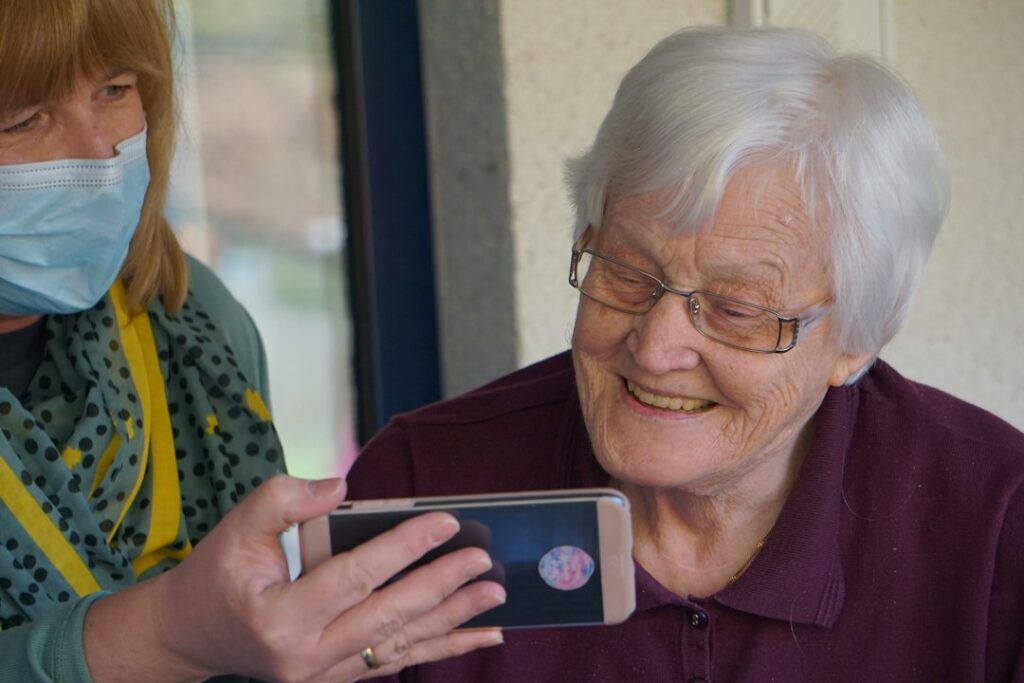
Yes. Many assisted living communities use secure messaging, video calls, electronic care updates, and digital calendars to keep families informed. These tools can be helpful when relatives live outside the area or cannot visit regularly.
Video calls may reduce isolation, help families participate in care discussions, and allow residents to remain connected with grandchildren and friends. Digital calendars can display appointments, activities, transportation times, and personal reminders.
Communication systems should still respect privacy. Residents generally need to understand who can view their information and what permission is required before health updates, photographs, or video calls are shared.
Technology can also create barriers. A resident with hearing loss, vision changes, memory impairment, limited hand strength, or little experience using smartphones may need a larger screen, simplified controls, captions, voice assistance, or hands-on support.
How does telehealth work in assisted living?
Telehealth allows a resident to speak with a healthcare professional through video or another electronic connection. It may be useful for routine follow-up, medication questions, chronic-condition management, mental health visits, or situations where travel is difficult.
A telehealth visit still requires preparation. Staff may need to help gather current medications, recent vital signs, symptoms, and questions. A quiet, private space is also important.
Telehealth is not appropriate for every situation. Chest pain, severe breathing difficulty, a serious fall, sudden weakness, uncontrolled bleeding, or a major change in mental status requires immediate emergency attention rather than waiting for a virtual visit.
A camera cannot always show the full picture. The healthcare professional may still need an in-person examination, laboratory testing, imaging, or another form of evaluation.
Can technology support memory and independence?
Simple technology can help residents remain independent without taking over daily life. Examples include:
- Large-display clocks showing the day and time
- Medication reminders
- Automatic night-lights
- Voice-activated calling
- Digital calendars
- Smart door or appliance alerts
- Audio reminders for meals, activities, or appointments
- Tablets configured with familiar contacts and accessible settings

The best approach is usually gradual. A resident may use one reminder or communication tool successfully but become frustrated by a complicated system with too many alerts.
Memory-support technology should also be introduced respectfully. Frequent alarms, cameras, or location tracking can feel intrusive. The purpose should be explained clearly, and the resident’s preferences should be included whenever possible.
What privacy concerns should families consider?
Technology collects information about health, location, movement, medications, and communication. Before accepting a device or service, residents and families should understand what data is collected, where it is stored, who can access it, and how long it is retained.
Cameras require special care. A camera in a common area may serve a different purpose from a camera in a private apartment or bathroom. Residents should ask about consent, recording, access, storage, and whether live viewing is used.
Strong passwords, device updates, locked screens, secure networks, and limited user permissions reduce risk. Staff should also avoid discussing private health information where visitors or other residents can overhear.
What should residents ask about technology before moving in?
Technology is only valuable when it works consistently and staff know how to use it. During a visit or care discussion, residents and families can ask:
- Which emergency systems are available in private rooms and bathrooms?
- How quickly are alerts answered?
- Are devices included or billed separately?
- What happens during a power outage or internet failure?
- Is there backup documentation for electronic records?
- Can residents use their own phones, tablets, or voice-controlled devices?
- How are accessibility needs handled?
- How are families notified about significant changes?
- What training do staff receive?
- Can a resident decline a particular device?
These questions reveal more than a list of available gadgets. They show whether technology is integrated into a dependable care process.
Technology works best in assisted living when it remains practical, understandable, and proportionate to the resident’s needs. Personal attention, informed judgment, privacy, and timely human response continue to be the foundation of safe daily care.
